Showing posts with label Jacob Levine. Show all posts

Sunday, December 8, 2019

What is the purpose of life? -- Week 15

I just laughed to myself when typing the title of my reflection post this week. It looks like an ironic semester-ending joke satirizing the idea of these reflection posts, and although it probably should be, its not: I really want to discuss the meaning of life in this post.

After our last reading, I had the opportunity to reflect on the idea of human nature and the implications of our semester on the idea of "eat or be eaten". After talking with Xandra this week, we came to an agreement that although perfection is impossible to reach, and that believing in the goodness of society or its potential to break the power-atrocity complex is naive, there is a solution in how to go about our lives. If we knowingly allow ourselves to be idealistic in a way, and work tirelessly to improve something in the world, its possible for us to make a positive shift, no matter how small. Each choice we make in our lives, each failure, each success -- they all seem to matter so much to us... but reality is that our lives are so insignificant in the grand scheme of the universe. While this could be a discouraging and self-defeating statement, it is also freeing in a way. The power that one gets when they zoom out and put all of that which is known to them in perspective is a dangerous one to wield and has led many educated people to suicide.

Despite this, I believe that this power of perspective can also be incredibly beneficial. It reminds me of a story I once heard from my Rabbi during Rosh Hashannah (Jewish New Year) services. I found a version online (https://www.cityyear.org/about-us/culture-values/founding-stories/starfish-story) and included it here:
"A young girl was walking along a beach upon which thousands of starfish had been washed up during a terrible storm. When she came to each starfish, she would pick it up, and throw it back into the ocean. People watched her with amusement. 

She had been doing this for some time when a man approached her and said, “Little girl, why are you doing this? Look at this beach! You can’t save all these starfish. You can’t begin to make a difference!” The girl seemed crushed, suddenly deflated. But after a few moments, she bent down, picked up another starfish, and hurled it as far as she could into the ocean. Then she looked up at the man and replied, “Well, I made a difference to that one!” 

The old man looked at the girl inquisitively and thought about what she had done and said. Inspired, he joined the little girl in throwing starfish back into the sea. Soon others joined, and all the starfish were saved."

While the ending of this story is a little corny or idealistic, the message really hit home for me and I think it captures a lot about why each one of us was put on this planet.

To extend this to my current situation, a college student with aspirations for the future, working day by day to make something of my life, is important. I have to remember that while my current grades, relationships, habits, health, etc will affect my future dramatically, I shouldn't be afraid to take risks and think about things in the context of what will A) make the world a better place and B) make myself and others happier in our own lives, rather than each and every small thing in life. 

So, I know that this post wasn't a revolutionary world-changing answer to the eternal question, "What is the purpose of life?", but I think that it explains a little bit that could give any one of us control over our own purposes and a sense of calculated, cautious optimism about the future. 

Wednesday, December 4, 2019

Culture Hierarchy vs. Diversity -- Holiday Edition

The blog question this week presents a very interestingyet potentially controversialset of ideas. I think the claim presented in the blog question regarding Todorov's focus on the other rather than on the effects of different cultural practices is profound and is an important distinction to make. So, to offer my own opinion, yes there are some cultural practices that are simply superior to others. This can be easily supported in certain cases such as in arguing that cultures practicing cannibalistic diets, and human sacrifices in modern times can be described as inferior. Beyond that, things start to get a little messy, yet not completely unmanageable.

First off, while it may be possible to collect enough empirical evidence about the effects of certain cultural practices and therefore compare them to each other, any conclusion that could be made would likely call for an extensive amount of knowledge of the totality of the context in which the practice is prevalent. What I mean by this is that it is very impractical to expect to empirically collect data of one cultural practice being "better" or "superior" to another. However, it may be possible to collect empirical evidence to suggest that a certain practice has a positive correlation with human longevity while a different practice has a less strong correlation with it, or something similar to that analysis. 

The second thing to consider is whether or not its a good idea to even begin to categorically suggest that cultural practices of others are inferior to one's own. As we all should know, this type of us vs. them or superiority complex has led to the oppression of many groups of people in history and often no good comes of this type of unprovoked, categorical negative assessment of others. This inspires the question: Can an individual practice a certain culture, personally dismissing alternatives, without subordinating those who practice said alternatives?

I believe the answer is yes, these two things can be mutually exclusive. I understand the argument that by conducting oneself in accordance with a certain practice, they inherently dismiss other practices and therefore believe these other practices to be inferior. However, I don't think that this is always true. I believe an individual could conduct themselves in a certain way simply because they are most used to doing things that way and have a deep personal connection to the cultural practices they participate in. Just because I don't celebrate the holiday of Christmas, for example, doesn't mean I have to believe that Christmas is an inferior holiday to Chanukkah. In fact, Christmas is a much more significant holiday to Christians than Chanukah is to Jews—if measuring the holiday by its importance within the respective religious group, Chanukah is clearly the less important one. Nevertheless, Chanukah is the holiday I gladly, joyfully, and meaningfully practice. This isn't to say that I think Christmas is a superior cultural practice, rather the comparison of the two is more like a comparison of apples to oranges and therefore I can practice the holiday while also happily wishing a Merry Christmas to Christians without a conflict of interest. If, for example, I wanted to make the claim that latkes are better tasting than Christmas fruit cake, I could probably garner a lot of support, but this conclusion is yet again a matter of opinion. 

Really, what everything boils down to is how strong the opinion of the majority is regarding a specific cultural practice. Let's say there was a winter holiday practiced by some minor religious sect in which at dawn on the day of the annual holiday the members of said sect gathered together, drank a glass of cow milk each, killed and ate five randomly selected community members between the ages of 12-14, and then sang a hymn, we could likely agree as a majority that this holiday is explicitly inferior to both Chanukah and Christmas. 

The problematic thing about using the standard baseline of the "opinion of the majority" is that this often changes. At one point in history in the United States, the majority opinion may have been that Chanukah is an inferior holiday because the Jewish people are inferior people. Just like, at one point in history the practice of homosexuality was seen by the majority as inferior to the practice of heterosexuality. In fact, and this one might really mess with everyone's heads, both of these opinions may still  be the majority opinion in some places in our country, if not nationally. That's why this question is so hard to answer and why giving an empirical value to the effects of a practice aren't objective. Heck, if the majority of US citizens believe cannibalism was an okay thing to do at some point in the future for some reason, then the idea that it is inhumane or has effects that are detrimental in some way to society could also change.

Objectivity vs. Subjectivity and other philosophical dichotomies or spectrums such as these I am dealing with in relation to this weeks blog question are undoubtedly intriguing to think about and discuss, yet I think the most important thing to take away from this whole exercise is this: treat other cultures and other people with respect, tolerance, and a willingness to learn from them whenever possible. Instead of trying to make a categorical claim about a practice being inferior or superior, make a personal decision about what to do and don't let your own opinion about which practice is right for you allow you to harbor hateful prejudice that affects your interaction with others. 

Sunday, December 1, 2019

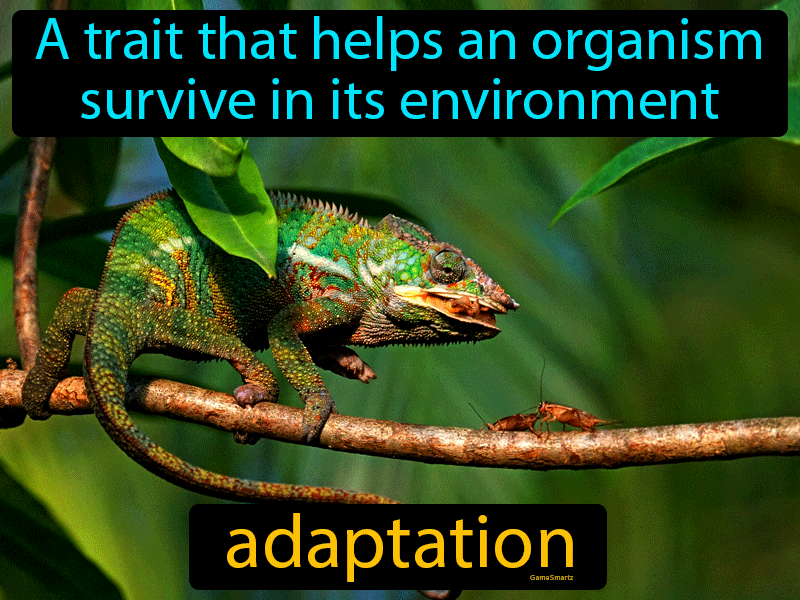
Adaptation -- Week 14

Before I delve into the topic for this week, I want to follow up on last week's reflection post about trying to talk about the history of Thanksgiving. When I actually brought up the topic with a few family friends, the conversation drifted quickly to the idea that the victors write history. This then turned into a debate in which one of my particularly chaos-loving cousins decided to play devils advocate and contend that (maybe not so jokingly)the Sons of Liberty were literally terrorists and that many British people were assaulted and cold-bloodily harassed by colonists in the pre-Revolutionary War time period. The basic premise that was being argued after dinner was whether or not the colonists would have been historically referred to as ruthless, overly-violent terrorists if they had lost the Revolutionary war. This then began to craft a conversation in which a younger cousin innocently (probably without realizing the depth of implication he had employed) suggested that if victors write history that is in some way bias, might certain truths that we take for granted historically OR presently, be false in actuality? That's when collectively the family decided to break out the pie and avoid a rabbit hole of intellectual debate (or torture and warfare as its referred to at the Thanksgiving dinner table).

So, back to my topic for the week--adaptation. It occurred to me before leaving to come home this week that I had really been at college for over three months, and it had already become natural to my way of life. Only a very small part of my entire life has been spent here at AU, but right now it feels like everything. Back at home, seeing my family, living in my own house, sleeping in my own bed, frequenting old hometown favorites with my old hometown friends: it all felt surreal. At many times I felt like I was living someone else's life, or maybe reliving a previous lifetime of my own. However, by the time the short, chaotic, action-packed break came to a close, I felt like I was used to this old lifestyle and to the surroundings of my home. Now, back at AU once again, I feel that same uncomfortable feeling that I felt when arriving home for the first time. I know that in the next couple weeks that feeling will shake off and be replaced with a cycle of finals-related stress, only to be gained back again when I go home for winter break.

If that last paragraph seemed like a crazy, mumbo-jumbo whirlwind, that's because it was and I intended for it to be that way. The chaos and constant change a college student such as myself experiences during this time is more than enough to completely disorient and unsteady someone. Somehow, us as young humans are very good at a particular skill: adaptation. When I realized how much I've been forced to adapt, change, and reflect in my recent life, I became quite proud of my ability to be flexible in regard to instrumental changes in life, and I hope this is a skill I retain even when I'm not the same naive young freshman.

Sunday, November 24, 2019

Commemoration: What is it all about? -- Week 13

My family has a lot of birthdays in November, including mine which happens to be next weekend. While my birthday has never been an extravagant occasion, I've at least had the experience (as almost everyone in the US does) to claim some type of ownership to a 24-hour span of time. To "sanctify" , almost, an entire day for myself and others to reflect on the fact that I do, indeed, exist. When described like this, the idea of a birthday seems to shift from a common simple way of life to a curious societal phenomenon. Why give any sort of relevance to a specific date simply because of its random association with past events?

Thanksgiving is also right around the corner and is yet another exemplar annual event for my curiosity. Despite its controversial history, the holiday itself has been around for so long with traditions that have ingrained themselves into the calendar. The holiday season is again another example of traditions born of the commemoration of past events. Sometimes, people forget the relevance of the traditions in the first place. Conversely, the relevance of a calendar date isn't usually realized without some sort of traditional commemoration.

Obviously, my brief and stupid attempt to be philosophical about the origins of "holidays" is something that may be pretty self-explanatory or simply useless to ponder over, but I also feel a profound sense of encouragement (after reasoning through this) to use each holiday or special anniversary to really reflect on the relevance of the event in the first place. This thanksgiving at the dinner table, I'll be thinking of Todorav and attempting to discuss it without starting too much chaos with the family and friends... we'll see how that goes.

Tuesday, November 19, 2019

Mixed Signals

To answer the blog question, I do believe that a large part of the Spaniard's victory resulted from their superior command of signs. Although this seems like a confusing premise at first, since the conflict was so focused around outright violence, disease, etc, the Spaniard's strongest advantage may well have been their literacy and capacity to manipulate the Natives' impressions. I think this advantage can be most easily broken down in terms of a constructivist's "blank slate" approach to new social situations.

With regard to the interactions between the Spaniards and Natives, the Spaniards have already had experiences meeting and introducing their civilizational qualities(forced conversion, teaching language, cultural practices, etc) to entirely foreign groups of people, and therefore to some extent had the ability to use this experience in dictating their chain of actions and responses in this particular situation with the Natives.

On the other hand, Montezuma and his people were hit with a culture shock of sorts when the Spaniards initiated contact. Another element to the whole interaction was that the Spaniards harbored a significant amount of ulterior motive that they knew through practice how to navigate and manipulate Natives through. Conversely, the Natives had no significant other motive than their survival and preservation. The argument could be made that the Natives, cautious of the Spaniards, wanted to advance their own interests in expelling or defending against the onslaught of Cortes and his crew, however the intent of the Natives was still very surface level, causing them to pay no mind to the possibility or reason for the Spaniards to manipulate their perception.

These arguments about the various constructivist backgrounds of each party show a clear advantage on the part of the Spaniards just simply due to situational experience and pre-existing knowledge allowing them to take a greater command of the "first contact".


Sunday, November 17, 2019

"Imma break every box they try to put me in" -- Week 12 Reflection

This week was pretty standard, just working hard to balance different parts of my life and tread water until Thanksgiving break comes along. Nothing huge stood out to me this past week, but the weekend was a different story. On Thursday night the madness started as the Browns won a crushing victory over the Steelers which had me and most Clevelanders celebrating, until the crazy fight at the end of the game that resulted in a damaging suspension for our team. No, it doesn't really connect to the rest of my reflection, but I'm still pretty salty about it.

Friday night, I went to my first concert since being at collge and my second live concert ever. Getting ready for the concert, which I went to with Asim and another friend, I realized that it was about more than just music, especially for them. NAV, one of the performers, is ethnically Punjabi, which means his family originates from the northern Punjab state of India. He has made it really big in the hip hop community and is an icon as a brown man who has achieved success in an industry that's quite hard to break into. A lot of his music refers to this aspect of his identity, which I really appreciate as something that helps him stand out and put out a good message. One of my favorite quotes of his is "Imma break every box they try to put me in.", which is a lyric in one of his songs that shows why he's such an inspirational artist for so many.

One big thing I've realized since I've been at AU is that despite everyone's "openness" and "tolerance", people are still put in boxes here for whatever reason. People who take certain majors, have certain political opinions, observe certain religious/cultural traditions, etc are still sometimes treated differently in odd ways for strange reasons. Life in general also seems to be very much a series of boxes that one is trapped in, always striving to break free and move on to the next goal and next part of their lives. I hope to reflect more about this in the future while also making a concerted effort to just be myself and not care as much what other people expect me to do, what me to do or how they view me.

Sunday, November 10, 2019

A World Away -- Week 11

People look into the past and miss it, they look into the future and are excited for it, but they rarely enjoy the present....

Its been almost 3 months since we have all moved into campus and this week is officially the longest I've ever been away from home. Talking to my family this week, I realized how much I've changed and how much the last 4 years of high school seem like a prior life. I feel as if I've been reincarnated into this life and only vaguely remember what it was like to be in my earlier one. There are certain things - like talking to friends/family, doing my hobbies in freetime, looking around at pictures - that bring me back to specific times that I've had back home, but in many ways I feel estranged from the Jacob who went to Solon High School and slept in a suburban house a block south of the fire station, on the side closer to the park than the shopping center.

Is this feeling a bad thing or a good thing? Or neither?... these thoughts occurred to me this week and I'm not sure I've really been able to answer them. I think it may just be a matter of accepting that life is so much different as you get older and experience a completely new lifestyle with new surroundings.

"Does everyone feel like this?" I asked myself. I was curious to see what people thought of their lives here overall, and what could be done to make them better. I asked some classmates the following questions and have included their responses:


  1. On a scale of 1-10, rate your level of homesickness since being at AU?
  2. On a scale of 1-10, how much does AU feel like your home?
  3. What things make AU feel like your home?
  4. What things at AU are vastly different from home?
  5. What (if anything) could others do to make you feel more at home?
  6. Other Comments?

Valerie
  1. 6
  2. 6
  3. The people here are friendly, my bed is cozy, the food here is like home.
  4. The communal bathrooms (-), no pets (-), no parental supervision (+/-)
  5. I don't know.
  6. AU is an interesting place.
Emmet
  1. 1
  2. 6
  3. Community dorm living
  4. No one to monitor or be in charge of you (+)
  5. Nothing, I'm good.
  6. "Nats suck... bryce harper is the GOAT"
Asim
  1. 1 million
  2. 2
  3. My friends
  4. Food
  5. Nothing
  6. I like turtles
Annie

  1. 2
  2. 7
  3. The people, my room, Letts 6 as a floor and daily runs
  4. Lack of nature, lack of ease of exposure to the outside world. Showering w/shoes on, no baths, no separation between school and home and no parents
  5. Make me hot chocolate... I love it because it makes my heart so happy
  6. Jacob you're a scammer
Xandra
  1. 2
  2. 8
  3. Independence, running, connections with people
  4. A lot of extra, less structured time. 
  5. Stop in more unannounced
  6. This is a wonderful post idea (yes, this post was inspired by Xandra) 
Holt
  1. 6
  2. 7
  3. People, independence 
  4. level of independence, weather,
  5. nothing
  6. This is a great idea I agree with Xandra


Disclaimer: In retrospect, these questions may not have encouraged enough freedom of expression and by default had very repetitive answers. Next time, I will change up the questions in order to present a better interview.

Tuesday, November 5, 2019

Trade-offs of Growth

The question of whether or not economic growth should be central to international economic policies is a flawed one, I believe. Economic growth is inherently the main driving factor behind economic policy, and always will be, because growth is the reason for the policies in the first place. The distinction is instead made between focusing on pure economic growth at all costs vs. economic growth as a side effect of a larger socio-economic improvement. This argument of mine can be reflected in what we went over in class, essentially the difference between neoclassicalism and multidimensionalism. The former was the nexus designed almost entirely around the idea of GDP growth, while the latter still used economic growth/decline as the standard measure of economic success and guideline of policy, but still had a strong emphasis on social policies and a wholesome approach. I think this multidimensionalism is ideal in terms of international economic policy.

Something else to keep in mind when thinking about economics internationally is that policy is much harder to enact multilaterally to make a concrete social difference on global issues than simply ratifying domestic economic regulations or issuing executive orders. Since silly things like sovereignty exist in which several entities with different circumstances, resources and abilities must come together to implement solutions (usually), there has to be a central driver of policy that can at least in some ways ensure a collective good. The identity of international cooperation forces economic growth to be central to policy in technicality, even if socio-economic issues are approached more holistically by individual countries, NGOs or other supranational organizations.

Sunday, November 3, 2019

Sports: A Constructivist Take -- Week 10

This past week I was downtown with some other global scholars watching the Washington Nationals win an amazing World Series Game 7 victory when I realized that, despite the hype around me as a new DC resident, I didn't really have any kind of investment in the team. Others voiced their doubts as well, "all these college students cheering are fake fans", "guys we aren't really from here", "its not our team". After the initial hype died down, I began to wrestle with these ideas of having some sort of "loyalty" or "responsibility" to a certain sports team. I knew that I had always liked when teams from Cleveland won or were successful, but why?

My first train of thought was that the reason I enjoyed seeing my local teams win wasn't the actual win, but rather the joy and excitement of the people around me. There's a victorious atmosphere that everyone has when a team that everyone is interested in does well. To some degree, the pride that people have feels like an air of superiority or even accomplishment. It astonishes me that us sports fans take so much credit for a win or for a consistently good franchisee just because we like the team or live in the city that the team plays in. "Why is this?", I asked myself. The answer I found wasn't simple, but describing it as a sort of constructivism helped me express my ideas.

If we zoom way out and just talk about the phenomenon of sports culture in general, we see something quite strange: masses of people paying in mass amounts to watch or celebrate other people who wear colorful outfits that correspond to geographical locations because of their talent in running around and competing in accomplishing various tasks. What is the significance of a team or a number on a jersey or a mascot? Its all based on the value we as a society decide it should have. Since sports and other athletic competitions have been such a prominent form of entertainment for centuries, the culture developed around them hasn't really been questioned. There is no intrinsic value in sports, but the enjoyment we get out of watching them and cheering for teams/players enables people to engage in festivities together, unite over a common goal (or enemy), and argue/discuss our opinions freely. In a way, we use sports as a social outlet of sorts.

The next thing I began to contemplate was the idea of being a "good" fan or a "real" fan. People who jump onto successful teams are usually called out for being "bandwagon" fans, since they've either never really stuck through a rough patch in a teams history. On the other hand, what about fans who root for teams that they have a legitimate connection to, but whose teams have been consistently good (Patriots fans, Warriors fans, etc). My thought, being a Cleveland sports fan myself, was that it definitely takes more heart and loyalty to keep rooting for an awful team than a successful one. So why do fans of successful teams get so much more "credit" than fans of bad ones? Did they really contribute to their teams success in any way?

Don't get me wrong, I'm quite happy the Nationals won, especially since I do feel some type of connection to DC sports teams now that I spend so much of my time here (and plan to do so for at least three years while in school). However, I'm still a proud fan of Cleveland sports teams back home and Israelis soccer teams abroad, because those are the teams I have my own connections to. So, I guess my point is that sports should be enjoyable and fun to watch and follow, but also should be something people devote loyalty to if they choose. In the end, the competition, the excitement, the heartbreak, the whole experience, is an entertainment medium that has blown up into a large part of the identity and daily lives of most of America (and even the world).


Tuesday, October 29, 2019

National Security as a Stamp of Approval

I agree with Wolfers' argument in that "national security" (or "national interest") is an easily applied ideal used to support legislation or policy that fits its malleable framework. Although, while its true that almost anything can be called a "security issue", if citizens have political power in a nation it is unlikely for these issues to be stretched as far. For example, if a politician of some sort is attempting to push healthy lunches for public school children as a policy, that's fine. However, if the politician claims that the healthy lunches are vitally urgent and must take precedent over other matters because it will raise the overall health of our population, which will make our country less vulnerable in times of war or bolster the health of those citizens in a draft, then many people will likely see this as a mutation/manipulation of "security policy". My argument is that Wolfers is essentially right, especially in regard to privacy/surveillance and allocation of resources, but there are limits to the flexibility of the notion of national security.

The Patriot Act is perhaps an example of national security being bent as a concept to rationalize policy. For better or for worse, this act partially sacrificed some privacy/liberties of American citizens in the name of national security in a post-9/11 world. Similar surveillance/privacy measures have been on the forefront of debate in our current time because of the affect on advancement in technology on the eternal, yet fragile power balance between people and their government. In countries that place less value on human rights or civil liberties, like China, the notion of "national security" can be stretched a lot farther with significantly fewer consequences. In my mind, there is a clear potential opening for some sort of dystopian or Orwellian state. It would be best to find some sort of narrower definition or limit to the national security idea, but what exactly that line would be is the trickiest part.

Another issue that supports Wollers arguments is military spending. Obviously, its something we need, but based on one's political views the need to ensure "national security" could mean vastly different budgets. My argument in regard to this is simply: of course! The phrase is subjective at the very core because people's opinions on it are so vastly different. This extends to other "glittering generalities" such as liberty, justice, privacy, equality, etc. These words may all have technical definitions, but they are not defined, if that makes sense. When it comes to structuring policy around these ideals, there is a potential of these words to be applied to a wide and flexible range of issues and solutions. While this could pose problems, is it really avoidable?

This all stems back to the Renaissance idea of the social contract. If "national security" and other generalities are used as a "Stamp of Approval" for policy to a dangerous extent, it is vital for the citizens to check this power imbalance (in a democracy) and watchfully ensure that these malleable terms aren't perverted or mutated into what they were never intended to represent.


Sunday, October 27, 2019

Simulations as an Instrument of Learning -- Week 9

Our first in-class simulation was similar in many ways to some experience I had in high school with Model United Nations. Participating in a simplified version of a real international issue helps everyone to understand how the multiple parties, conflicted interests, and complicated problems all interact. By putting ourselves into the situation, our perspectives shifted and became much more in tune with and aware of the real situation. We learned not just the details of the issues that Nigeria faces, but also the institutions and motives at play.

When it comes to these to big lessons, I think that the latter half will play a bigger role in our continued education. What PTJ said at the end of class about each group not catering to their audience (the US President) as much as they should have, we all realized that in the real world, foreign policy is largely dictated by what appears best, rather than what actually is best to solve a problem. What the simulation accomplished, beyond its surface-level teachings, is making us aware of how much Machiavelli's arguments about self-interest and appearances still matter in decisions countries make.

This can be extended to the decisions we make in our own lives in some ways. Although it doesn't have the same connotation or context, asking the question "Are we doing things because we really want to/because its right or because of the appearance we will have/reputation we will gain?" is an important distinction to make. This is something all of us can think about moving forward.

Sunday, October 20, 2019

Humor -- Week 8

After the serious topics we were discussing in class last week and the learning I did about my own family's experience with oppression and persecution based on my identity, I needed an outlet and began to talk with my roommate about what was on my mind. I learned about his family, he learned about mine, and we both began to joke around about the similarities and differences in our upbringings as a result of our cultures. That's when I was reminded yet again about the power humor has to bring people together and make people feel better. The idea of "laughter as the best medicine" is a cliche that is used a lot, but the truth of it is understated.

I began to realize this week that when I'm stressed out or down about something, I cope sometimes by joking around and making others smile or laugh. It helps me feel better to see those I'm around laughing and to laugh with them. When that happens, there is an air of happiness that feels warm and exhilarating.

Humor has played an essential role for me in meeting new people so far this semester and trying to diffuse tricky situations. Its a useful tool in life to be able to control humor and I hope that its something I can be good at into the future. Its important to relax in the face of difficulty and hardship, refusing to take trivial drawbacks too seriously and growing because of it.

Tuesday, October 15, 2019

Comfort or Forced Aspiration

Being pushed down, isolated, discriminated and oppressed as a group creates an unimaginable difficulty that hurts generations of people. As Du Bois explains, when someone's identity is considered to be a "problem" by the majority, it is extremely damaging. The struggles of the African-American community with double-consciousnessin a country that has committed such awful acts against them and systemically makes life for their people difficult to this very dayare quite substantial. Possibly, the extreme determination of the African-American population in pushing back against these struggles and achieving commendable things despite being pushed down seems to be a "benefit" on the surface to some. I'm not sure if I agree with this.

I think it is metaphorically similar to the tortoise and the hare fable, in which the tortoise's slowness is represented in this example not by any lack of ability of the African-American population at all, but rather their oppression by the country they live in. Despite this hindrance, with persistence and wisdom, the tortoise beats the lazy, all-too-confident hare who takes the speed he is endowed with (luxury of being in the "societal center") for granted. In reality, the situation is much more complex (for example even with resounding merit and persistence, people who are oppressed are not always able to succeed), but I think the loose metaphor stands in contributing to my argument.

What I mean by this is that African-American children are faced with the issue of being forced to work harder to navigate societal impediments than those children who are in the "center population". This isn't a benefit to them, rather a harsh necessity of their life that they shouldn't have to deal with. This concludes my base argument on the blog question.

Anyway, I want to steer away from giving a lot of personal examples of my own experience and my family's experience with oppression and double-consciousness as Jews, since the blog report asked for a more abstract analysis. However, I will share that the historical struggle of Jews to be recognized as citizens or as having equal standings as non-Jewish citizens of countries in which they reside in is an awful struggle that has caused so many of my people to have to work harder to keep their identities and to succeed in society. And in some ways we have used this disadvantaged platform to inspire us to success and to fighting through oppression, but this isn't a benefit or a blessing... it speaks to merit and teeth-clenched chutzpah.

I will say, that the double-consciousness of minorities does usually result in them having a stronger community and can bring together multiple communities in solidarity with each other (the alliance between MLK Jr. and American Jewery). This is simply a beneficial side-effect of dealing with hate and bigotry, which is a clear distinction to make.

The bottom line is that double-consciousness and oppression forces people to navigate society and overcome obstacles, but isn't a benefit as much as it is a harsh necessity that might end in a favorable result.

In the end, I really enjoyed reading Du Bois' insight on double consciousness and I think its important to balance multiple identities without sacrificing either, despite the difficulty and pain that comes with this, and emphasizing the flowers that do grow through the cracks in the sidewalk.


Friday, October 11, 2019

Mid-Semester Reflection -- Week 7

This semester has been a whirlwind. After talking with some friends and other global scholars, the consensus seems to be that time so far here at AU moves slowly as one experiences it, but when looking back on the last 7 weeks it seems like a blur. As we all transition to this lifestyle and begin to dive deeper into our classes, there are probably certain lessons that stand out to us (academic or otherwise). I want to talk about a several lessons I've learned since being here:

  • Make sure to go to TDR when the hot food is being served.
  • Use the CLEAR center to practice my Chinese speaking skills
  • Stay organized with a planner/calendar
  • In classes I'm not as interested in (AUx) participate anyway
  • When making microwave mac & cheese remember to take the aluminum-lined cheese packet out of the mac & cheese cup before microwaving it
  • I have a profound interest in theory and big-picture areas of international studies
  • The lox bagel at Einsteins is a phenomenal breakfast choice
  • Eat food more than once a day
  • Grammar and sentence structure that goes into building sentences is very important when trying to become a better writer
There are definitely some more, but those are the ones I thought of off the top of my head. This second-half of the semester, I hope I can learn from mistakes I've made and also expand on the areas of interest I'm beginning to develop.

Wednesday, October 9, 2019

Socio-ontology at Odds With Self-driven Interest

At a Micro Level -- Individuals

At what point does an individual choose to act in accordance with a particular social norm despite their own self-interest? At what point does an individual break a particular social norm because of their own self-interest? I believe these questions pertain directly to the validity and criticism of Shotter's constructivism.

Self-interest and social normality seem to be placed on opposite sides of a balance scale. They aren't mutually exclusive factors in a persons environment or choices. Driving on the right side of the road (no pun intended) seems to be both an act of self-interest and a conformity to a social norm. Claiming that driving on the right side of the road is only a social norm because it is in everyone's self-interest (so they don't crash and die), or claiming that driving on the right side of the road is in everyone's self interest only because there is a heavy precedent set in it (since it could very well have been the case for us to drive on the left-side of the road... and if everyone did it, it would still serve individual self-interest). In a way, this might be a chicken-and-the-egg-esque argument.

On a more individual-specific level, I think this driving example pertains particularly well. If one buys the idea that driving on the right side of the road is motivated by self-interest, liberalism and realism would still approach this situation in two different ways. A realist would say that they drive on the right side of the road in order to survive while a liberal might because they would get fined or pulled over (or yea I guess injured) if they didn't obey the rule. In another regard, a realist might not obey traffic rules in order to get someplace faster while a liberal might speed a little bit because the benefit outweighs the substantially smaller risk.

Anyway, I think the overall idea is that as it pertains to individuals or specific situations, the question of constructivism isn't necessarily whether or not it is too idealistic, rather whether it is able to be separated definitively and entirely from power and interest, as dialogue and social experience revolves inherently around these values in these "micro" situations.

At a Macro Level -- Policy Scenarios

My opinion and analysis on constructivism changes slightly with some zooming-out. On a larger scale, the concept of constructivism seems to be on a higher plane of theory than liberalism or realism. Power and interest as basic drives that are useful for predicting behavioral patterns of entities are simpler and more limited concepts than constructivism, but also are obviously realistic. Constructivism as the idea that "blank slates" are filled with interaction and societal pressure than in its own regard has no intrinsic value is much more complex, but carries with it a more highfalutin air.

One still sees similar concepts to the driving example when thinking about the theories on a macro-level, but there's a capacity to separate the theories into different applications. What I mean by this is that parts of Shotter's claim revolve more so around the development of social roles and the assignment of value to intrinsically worthless things/institutions--these tenants of constructivism are justifiably relevant and seen in real life. However, the idea of the theory as a whole consistently holding true across varying settings and belief systems is quite naive.


Sunday, October 6, 2019

Too Little Time -- Week 6 Reflection

This week was, to say the least, a crazy one. It began with Rosh Hashana, the Jewish New Year, which is one of the two most important holidays in my faith. While I had a hard time not being home for the holiday for the first time in my life, I was able to find an inclusive community and have a festive and meaningful experience. Perhaps the hardest part was trying to explain to my professors and peers why I was missing classes and dealing with some backlash for participating in the holiday. I had to spend a lot of time catching up and making up for what I missed (especially because of some particularly difficult writing and Chinese assignments), but it was worth it.

I also had my first Mock Trial scrimmage to prepare for, which was a daunting task. Luckily, I was able to successfully memorize and do a decent job after a large amount of stress and a less than ideal amount of actual practice.

Family weekend came at both a inconvenient but also much needed place because of everything going on and the holiday season. After six weeks, I think I'm finally starting to get into a rhythm of life here at AU... and none too soon, because World Politics theories are starting to develop into a bigger picture, while similar developments are happening in some of my other classes.

Its an exciting but challenging start to my New Year and I hope to become a better student, friend, family member, and person in general!

Tuesday, October 1, 2019

Fed 10 Meets Media

The new age of social media and internet sharing has totally transformed the American democracy, but the concept of factions Madison develops in the Federalist Papers still holds some truths of both the inevitability of factions and of the struggles present in keeping them under control.

The contemporary news and information spreading scene is one that can be really beneficial and shows great progress in reaching not only more people, but especially much more fairly reaches all different types of people. The span of the internet is unprecedented and continues to grow, yet this d international cross-boundary virtual communication space can sow just as much division as it can unite.

Two large examples of ways social networking and modern media get problematic is with celebrity/big name influencers on social platforms and the distrust/question-ability of contemporary modern news. Social media is a platform that gives celebrities the central dais while the educated (or average citizens even) take a backseat. Although, it has its advantages and isn't always restrictive of those that have fame, the inherent design has flaws in reinforcing societal conventions of power concentration. Also, President Trump's fear-mongering and scape-goat methods of his "fake news" tirade create a difficult situation that uses the inaccuracies/issues present in American media outlets to categorically discredit information he doesn't approve of. This improper characterization of the media, I believe, somewhat overshadows the legitimate claim that there is a credibility issue with even mainstream media, and the grey area that exists when trying to find an objective lens on the world around you.

As discussed in famous works of science fiction, this modern scene has a dangerous capacity to degenerate into a more abominable thing, yet I believe that despite its faults it overall is a positive for the time being and reinforces Madison's concepts about a connected large republic and factions.

Sunday, September 29, 2019

Week 5 Reflection -- 学汉语学得很难

Not to complain, but after taking the language from 7th to 10th grade, taking Intermediate 1 Chinese is quite the challenge. I am remembering some elements of grammar or some vocab that I learned back in the day, but speaking and getting it right is really difficult after not really interacting with the language for 2 years. I know I can't drop the class since its 5 credits, so I'm pushing through (plus I don't mind a challenge). Despite my resolve to be successful in the class, I won't get much further once the "review" period ends next week unless I commit myself to speaking on a regular basis and to getting my book work done ahead of its due date so I can begin to review for quizzes.

Another thing keeping me focused when it comes to this class is my forward thinking. I know that eventually, learning the language will come in handy for me and it could very well help me in my career. Obviously, the long-term benefits will pay off, but for now I'm going to probably be studying until my thoughts and dreams are in Chinese, too...


Tuesday, September 24, 2019

Realist take on Climate Change Strikes

Leaving my own opinions on the climate change strike out of the picture, I began to put myself in the mindset of a realist and shape my view of the world to prioritize nationalism, power balance, and resource strategy at the top of the list. When reflecting on the properties of realism that we discussed in class on Monday, and comparing these ideas with the mass movement of protests that occured in the last several days, I came to the conclusion that realist would likely condemn the strikes as ineffectual and naive. While this sounds controversial and maybe ironic (to call climate strikes naive), I think that realists would argue that climate strikes really don't do much to change the reality underlying the problem.

Whether or not a specific realist agrees with the general concept of the climate strikes, the cynicism and harshly straightforward take on world politics by realists prevents them from seeing the concrete value of these events. For example, a realist, who may be concerned with oil coercion or power dynamics between contries in conflict or hegemonic adversaries, likely would assert that the nature of the current world economy and therefore hierarchy of power depends way too much on practices that harm the envrionment such as the utilization of fossil fuels to allow groups of citizens to have as immediate of an effect as they are hoping/protesting for.

I think that the climate strikes wouldn't be characterized by realists as anything else than idealism. A realists take on the climate situation would likely be to suggest envoronmentalism in the lense of practices which would give a nation or group a tangible edge in power dynamics. An example of this may be to suggest that a country invests heavily in highly efficient renewable energy, or something of the sorts, in order to push itself ahead of its contemporaries in the long run.

In some senses, the realist perspective is like a dip into cold water, you don't want to stay in too long for fear of freezing up in the inherent cynicism and harsh take on reality, but once in a while it is important to approach things from a place free of disillusionment and refresh your perspective.

Sunday, September 22, 2019

Adventure and Discussion -- Week 4 Reflection

This week I had the opportunity to go downtown with a family friend to the Kennedy Center REACH festival. The REACH is a free public event that the Kennedy Center is sponsoring to commemorate the opening of its new REACH plaza. Extra funds in the Kennedy Center budget have been used to build a plaza full of new performance halls, child learning labs, gardens, art, auditoriums, VR labs and more. Tickets were free so we got passes to a super unique event that the REACH festival was hosting: the "Time-Machine Roast". It was advertised as a "humorous and critical modern look at the legacy of monumental historical figures." While I definitely thought the show would be funny, I didn't expect it to be as vulgar or hostile as it was... for sure not PG-13. Despite the bawdy, out-there roasts of the likes of Christopher Columbus, Johnny Cash, Emily Dickenson, Jim Henson, etc, I still really enjoyed the show and had a great time exploring the visionary new addition to the Kennedy Center.

It was great to get out and attend a festival like that, but life back at AU this week wasn't too bad either. In my Chinese class, we took a large chapter test that I thankfully did pretty well on. For a super challenging class, I'm happy with the progress I'm making (especially considering how much work goes into it). I also am enjoying our class discussions on realism and Machiavelli. The different styles of learning with our debate vs. the class "Yankee baseball" discussion were both valuable ways to analyze Machiavelli and learn about each other's opinions.

I'm looking forward to learning more about the various theories of politics and how they pertain to our world today. With more activities and discussions, I'm sure we will all learn not just about the readings we are analyzing, but also about each other and society as a whole.