Showing posts with label Noël Sedona James. Show all posts

Sunday, December 8, 2019

It's Been Real, World Politics

To stay true with the lingo I’ve been using in conversation, it is a bit silly that the semester is coming to a close. 
I have changed. Back home, my best friend and I would always talk about how college would be a wondrous time to redefine the versions of ourselves to be what we want to be without any past reputations or home town expectations holding us back. It has been quite an experience to see how we are revamping our old selves so quickly.
From the second I stepped onto campus I have tried to be more present- to be the better Noël and define the version that AU would know me as to how I want to be perceived and the qualities I want to have. This is not to say I’m a completely different person, only that I can’t say I am a fan of being forever identified with New Jersey and all that. Washington D.C. represents so much for me. It is a new home and a place that is filled with opportunity constantly pushing myself to be better. 
However, through this, I have let go of many parts that used to represent a larger part of myself. When seeing a couple of friends over Thanksgiving break, I found out how much I had changed… I missed discussing politics and absurd IR theories at 2 am in the sky lounge. I am one of the lucky ones in that my college experience has made it feel more like home in 4 months than New Jersey. 
Academically, I was terrified of AU and international relations and honestly, I still kind of am. One of my first reflections was about being a small fish in a big pond. Since I had close to no experience in what IR entailed, I was hit by a big dose of “imposter syndrome.” Coming here, especially a part of the gloscho community was intimidating beyond measure. Although I still have times of doubt and fear, I can understand the growth that being pushed in my beliefs and skills has resulted in. 
I can see how the idea of being a small fish in a big pond is kind of absurd… One thing (among many) I learned from this semester was how relative everything is and the ideas of comparing yourself to others. Everyone’s pond is different and there are factors that we cannot control (climate change, drought… etc.) but as long as we all stay aware that there are ponds different from our own, all we can do is just keep swimming !
World Politics has been like no other course. Between the energy and diverse structure PTJ provided the class and the insane discussions we had, I continue to be exhilarated by how large the expanse of IR is and how many paths there are to explore. I only wish that PTJ could switch to lecturing our International Research class next semester instead of next year. That being said, I already cannot wait to return to AU after winter break and reunite with everyone as we take on another semester!
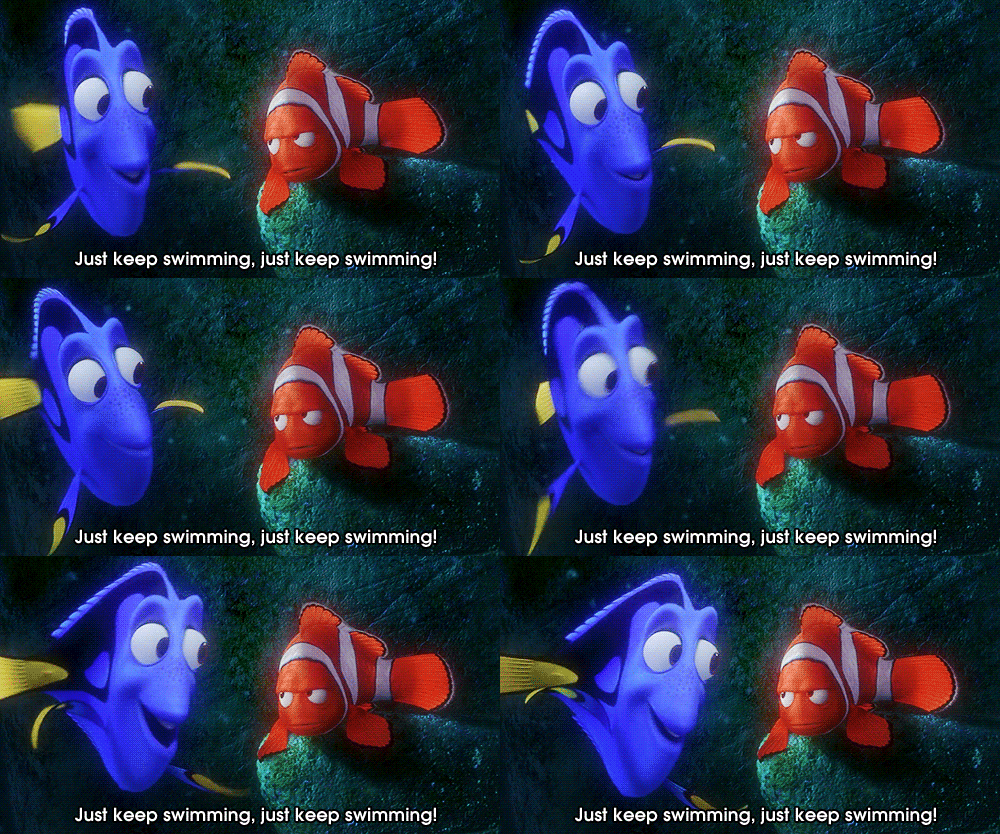
Image result for dory just keep swimming gif

Tuesday, December 3, 2019

Who Knows ?

“Difference with equality” is a concept that I do not think fully exists in the way that it is isolated within this context. This is because the idea of equality includes having the same status, rights, and opportunities whereas the complete definition of the difference is that of having variations of these same aspects. However, the root of the post is to look at whether the knowledge of effects delegitimizes the moral force of different questions. While there is a difference between the statements of opinion and those more empirically based. However, reverting to the “inspiration” behind this question and the two examples of flat-earthers and anti-vaxxers, I agree with the points made in that post, stating the difference is on whether individuals are harmed as a result of ignorance. 
Within Todorov’s three axes, epistemic, axiological, and praxeological, I feel that them being seen as equivalent is not the way realistic to how they realistically progress. Looking at them about knowledge, the lowest and simplest form of interaction between “others” would be the lack of knowledge and therefore epistemic. The next level would be labeling this ignorance and unawareness through axiological forms. The hierarchy ends with a more direct exchange between the two groups, in search of knowledge or with an awareness of individual bias, ignorance, or naivety through the praxeological axis. 
In general, I believe that the world is seeing a trend of praxeological mindsets where knowledge of effects is promoted, while it is still accepted for a party to not be as factual if they are aware of their perspective being dictated solely by values. With this, we should be looking to continue furthering research for the areas of ignorance that inflict harm on others. However, there will always be different perspectives that see issues as being both empirical or inaccurate based on factors of upbringing and beliefs. Moreover, the debates of religion and opinions of many social issues cannot be completely refuted, and should not be delegitimized because there is personal evidence that factualizes these beliefs. Conversely, beliefs that cause harm or damage to individuals or have more negative effects than not, should be better supported with morals as well as factual events. 
I still think there are many layers to this question that can be further answered with more exploration on both the axes as well as how they can be applied to the concept of “difference with equality” and other varied questions alike.

Monday, December 2, 2019

Now we all know what sustainable dredging is!

This simulation could be agreed on being one word- sustainable. Sustainable in a different sense because the class was ever persistent in prolonging (or sustaining) the debate and analysis of dredging to go on for quite literally, infinity.
My group with Molly and Kiran represented the South Pacific Business Development. Between sitting in the back and not saying a word for the entire 7000-minute long conversation about dredging, many of my friends asked afterward what was up… well, here it is.
As a microfinance group, our main motives were formulated around the people and our integration plan, which unfortunately got shut down quick, thanks to EJF. We chose not to speak during the dredging debate as it was secondary to our primary focus and by mentioning our opinion, we feared our main motives would then be glossed over. We wanted to keep in line by only mentioning and speaking directly on the issues that the SPBD does and did not want dredging to appear as a primary concern of ours. Additionally, by hearing the other groups' perspectives on this issue, we were able to spend time revising our amendment in attempts to make it fit within the guidelines followed by each group. Although our amendment was not discussed long, I was glad it was able to be mentioned as it represented the SPBD and summarized our strategy document in the best way possible. It would have been interesting to see more of what the other groups thought of it and possible revisions that could have been made, however, I am glad our group was able to mention the SPBD’s main objectives, even if it only lasted 2 minutes of discussion.
Something I enjoyed most about this simulation is how authentic each group was to their motivations as a country or organization. In attempts to follow suit, the South Pacific Business Development has pre-existing work with both China and Japan, as well as an interlocking base with many institutions similar to the other groups present at the simulation. This is why our amendment was proposed with the hopes of involving all the other groups, as a microfinance project does not stand alone and needs sponsors, funding, and support from countless organizations and countries. Overall I appreciated the structure of this simulation as it felt more natural and relaxed, as opposed to the previous simulation. My only wish would be that we had more time to genuinely discuss more issues… and maybe we could have added another word!

Sunday, December 1, 2019

Queue up "Christmas Hits"

It is  officially Christmas season so as many may expect, given my namesake, I will be going HARD. 
Thanksgiving break happened… it has never been my favorite holiday and it was especially isolated as all my family is scattered around the country so it was just my mom and I and our little tofurkey (which was amazing, I recommend Tofurkey to everyone). I did get to watch Frozen II (again!) and the new Mr. Rodgers movie.. as well as the entire new season of The Crown, so it was a successful break for TV and films! I also got to spend a couple hours with my best friend and the huge hugs her family gave me made it feel so much more like home, in addition to the bruise on my arm developing from her football tackle when we first saw each other. I got to FaceTime my sister with my mom a bunch to see the holiday decorations in Disney World and hear more about the “behind the scenes”. Although she will also be missing Christmas too which is definitely unfortunate, Disney and Christmas are my two favorite thinks so it just set me up to start getting more excited for Christmas. 
Christmas is arguably the best time of the year and I truly just love all the days leading up to the actual 26th more than anything as people are so much friendlier. Especially in New Jersey… we need that friendliness!  I do wish they didn’t need an old guy in a red suit to spread joy, but I guess pickers can’t be choosers. I also love making gifts for people and cannot wait to get some fun AU/DC gifts for my friends and family. 
I am SO excited to be back with this American family for the next two weeks, even though it is finals time (*screams*). The days off of school were a nice calm before the storm of an insane amount of essays and the craziness of the end of the semester. I am definitely not looking forward to the impending showers of stress and anxiety. 
It is also insane to think that the semester and all my classes will be over after these next weeks. Time has flown by and I cannot imagine not having World Politics every week! WIth that, I’m looking forward to the simulation this week and how it will be a different experience to our previous one. At the time of this post, there are 23 days, 10 hours, and 24 minutes until Christmas…. 

Sunday, November 24, 2019

It was a cold week (the wind is insane & Frozen II came out).

This week marked the official turning point of the semester where classes are winding down, final assignments are posted, and my “to-do” list has doubled in size. In combination with going home, I am a bit overwhelmed, to say the least. 
A large portion of this week was filled with my Space Force essay… which is 99% new from my first draft, so I will be crossing my fingers that it is at least a little better. I find Conquest of America a whole different experience than our other readings. For starters, I and some other Global Scholars in the 1st year seminar, “Globalization and the New Monroe Doctrine”, were assigned to read both 1491 and 1493 by Charles Mann. These books focused on the conquest of the Americas while venturing into many global implications as the years passed. It has been interesting to note the differences between these authors' rhetorics and the information they each presented. So far I have noticed that Todorov integrates more primary source accounts into his speech whereas Mann was an avid supporter of summaries and footnotes. I think I have enjoyed Todorov’s work more as it is more concise while still getting the main ideas across, additionally, I appreciate how he explores La Casas in comparison to Cortes and Columbus. This book has caused me to question more the role and exchange between morality and politics in international relations, as well as how all historical accounts are inherently biased in a multitude of different ways. As Todorov compared the ways that these explorers looked at the Indians through different lenses, I got a better sense of how drastic these accounts can be. 
This weekend I got to see Frozen II with a couple of friends, and as an avid Disney fan, I would say this movie is pushing the best that Disney has ever produced. I immediately texted my sister (who works at Disney) to pick up all the Frozen II goods for me with her employer's discount. Between this movie and watching The Good Dinosaur this week, Disney has been working its magic to refuel me. Basically, Spot is the best animated Disney character and this Frozen II soundtrack is going to be on repeat for the rest of the year.

Saturday, November 23, 2019

Is there such thing as a "just" war ?

During class on Thursday, I found myself to be bothered by how the concept of just war was excluded from the conversation. I did not raise my hand to talk about it so I did not help that case, however, I got thinking. The debate of whether a just war can even exist is something so complex that a debate could last forever. It has been circulating my mind and I think I have come to some personal opinion. Going back to the general concept of perspective, I feel the determination of what contributes to a just war is dependent on who is speaking. Similar to how we couldn’t praise Montezuma for abiding by his culture while completely condemning Columbus for doing the same, with the only difference being that Montezuma became the victim and Columbus did not. In the case of war, one side may see it as a “just” experience simply because they were victorious in the fight. 
However, I do think some general qualities could be applied to a “just” war. Relating to its morality and representation of democracy. There are scenarios in which the perspective dictates whether something appears to be good or evil, however, I believe there are some situations that are objectively moral and good. For example, if the Spanish conquest of the Americas is to be considered a war, it could be considered moral from the Spaniards that felt entitled to the land. Conversely, the Indians could refer to the conquest as immoral since it was based on discrimination and developing a hierarchy. Additionally, the word “war” has violent and partisan connotations to it that adds further contradiction between both “just” and “war”. 
This is a just a couple thoughts I’ve been having, I would love to hear what some other viewpoints are on this issue of the existence of a “just” war.

Tuesday, November 19, 2019

Did the Spaniards defeat the Indians by means of signs?

In short, yes. However, I would like to break apart this question to try to reformulate it to better represent the situation. It is well known and described in Conquest of America how the natives' society was formulated and run supremely by prophecies and omens. They believed solely in “omens and divinations deserving the greatest prestige” (Todorov, 66). This mindset, that all events would be justified by prophecies showed how spontaneous actions were nonexistent and that any events that occurred had to be previously seen by a sign.  
I would rather change the format of the question then as these signs gave Spaniards power without them knowing. A question I propose would be the role and significance the signs played in the downfall of the nation's empire. This question puts a focus on the fall of power, rather than handing of power to the Spaniards, as well as, the idea that the Indians were solely defeated by their relentless belief in prophets. I believe that this difference is important since there was no ulterior motive for the Indians to concede their power to the Spaniards by simply following their beliefs and there were many other factors that gave enough leverage for the Spaniards to survive over the natives. 
Although it is interesting to take the “control” out of defeat, yes, the Spaniards wanted to defeat the Indians, but they did not have control in it. They were going through with concepts and ideas that had never been tried in this environment before. In many ways, their societies and beliefs were so dissimilar that neither were able to overlap enough for one to have control over the other. 
Signs did contribute to the downfall of the Indians, but they were not the single form of defeat by the Spaniards. The difference is that signs were the instigating factor that established differences between the two sides. Although the Spaniards, from being seen as divine gods to dictating their omens like the moon, were not aware of the impact that these signs were having in leading to a hierarchy being created. These signs allowed the Spaniards to take advantage of, and they did. For example, Columbus fabricated a tale that he would take away the moon in exchange, while he knew of the lunar eclipse, for the Indians to “bring him provisions without his having to pay for them” (Todorov, 19). This action was at the luck of Columbus that there (a) was an eclipse and (b) the Indians were easily swayed by prophecies and signs. 
This truly shows how although signs were a large contributor to the downfall of the Indians, they were not the cause of defeat. It would be interesting to look at more factors that played into the complete makeup of the (Spaniards) new world.

Sunday, November 17, 2019

College Gave me a Home Upgrade

This week, I reflected a lot on the idea of home. With Thanksgiving coming soon, I keep finding myself saying I am excited to come back home… as in back to AU. This idea is completely wackadoodle as I have lived in New Jersey for 18 years and only here for 3 months. In a conversation over TDR, my friends were reiterating the idea of home being found in people and not in places. Although it is easy to love DC more than New Jersey… I mean, NJ doesn't get bad stereotypes for no reason, I still feel that AU has become my home because of the people I am surrounded by daily. The community built here has pushed and challenged me while also providing comfort and relentless love. I feel so lucky that AU has brought so many beautiful people into my life that make it feel like home. 
With the idea that people are home, I am looking forward to seeing some of my friends
from New Jersey over Thanksgiving break as I am excited to hear about their new homes at college. Although going back to NJ will be sad not being able to see my sister as she is working at Disney World until January, so this will be the longest stretch that we will not be able to see each other. Although technology is amazing, facetime misses out on a lot of things. 
Facetime did prove useful this past class. It was an interesting experience having a facetime call running our class, however, it was a fun experience to see how it came out. Must have been a funny thing for an outsider to see a bunch of students yelling to the computer about Columbus’ “chosen ignorance”. I am looking forward to the return of our normal class dynamic.

Why Don't Animals Run the World

In class, the question was raised about how the human treatment of any being or entity that is not the same as us may be justified or not simply because we do not care to understand life from any other perspective than that of our own. About something that PTJ mentioned in terms of animals and our treatment of them, I find this discussion immensely interesting. While I am in no way comparing the treatment of Native Americans to the treatment of lab mice, I am interested in speaking a bit about what some differences and similarities may be.
The world has become run by humans. We have ruined the environment and now the preservation must be falsely generated to account for the damage done. Due to this, animals and plants have a new interdependence on humans. They were once able to survive alone and independently but now must rely on sanctuaries and research funding to maintain their species. Although Koko the gorilla was able to be taught sign language and prove more similarities these animals have to humans, they are still placed as inferior to us. Is this done because of the ignorance that humans have towards understanding the language and society of different animals, or is it because instead of understanding, humans instead force their language onto animals. When they are unable to completely adapt, they are deemed as inferior.
This relationship is interesting, and I am not sure what the answer is… as it seems like it has many different possible routes. While there are millions of ways in which humans mistreat and abuse animals for all sorts of goods and services (for no reason), I am not sure if other species of animals, no matter how advanced, will ever be considered equal to humans. Despite this, I will always be out supporting animal rights and cruelty- free world because whether one being is superior to another or not, I do not see any reason why there should be so much abuse of power and cruelty on another living thing.


Sunday, November 10, 2019

The World Spins Faster in College

This past week has been filled with much reflection, besides the normal allocated time in which I write this post. My friend who is still a junior in high school came to visit American… and it was crazy to be reminded of what my life was like only 2 years ago. Time has been flying and I can’t believe that even more is going to change in the next couple of years. To make matters a little more grand,  I made my 3 year academic schedule this week which led my entire day to exist on the brink of an existential crisis. I often feel that so many things are not in my control so I am led to grasp onto any excel graph or chart that can give me some sense of stability in my life. It does not help that life in college is moving a solid ten times faster than life outside. Life in a classroom is matching that speed. Our discussions this past week were extremely interesting and I am starting to see how everyone is actually starting to integrate our learning into the discussion consistently without having to always pull out a direct reference. I also feel a different energy where people are no longer as afraid to disagree with each other and are quicker to respond. It is interesting to think of how far we have come in our debates and discussions from the beginning of the year. I am looking forward to seeing how the second simulation will transpire and the ways in which our lives and actions will continue to change in these next few weeks!

Saturday, November 9, 2019

More on the "Right" to Wealth

During class on Thursday, I was hoping to expand on the “right” to wealth and how quasi-states should be dealt with in foreign aid and policy. 
I think the idea of sovereignty and the “right” to wealth goes back to defining equity and equality. Ideally, economically and socially developing countries would be given the equity needed to be successful and open up the opportunities to have wealth. However, there is often times the idea that giving these countries many opportunities and funds on the basis of equality is used to justify whatever economic aid is given under the guise of colonialism. This creates a system of “equality” that is forcing these quasi states to remain dependent. This can be seen in areas like India or even East Berlin. These areas have been enveloped  by superior territories (Britain or West Berlin/Western Countries) and have therefore been forced to sacrifice much of their individual identity at the hands of this super power, as well as, are not able to develop at their own rate to reach autonomy. With the continuous “support”, a cycle of dependence is enforced on the foundation of equality, not equity. 
I find this idea very interesting as it debates with the arguments of foreign aid being colonization or not. I believe my current standing would be that foreign economic assistance through the mindset of pursuing equality, is often counterproductive for the quasi-state and resembles a system of colonization. However, when aid is provided through a basis of finding equity, there is greater opportunity to achieve autonomy and wealth individually. 

Tuesday, November 5, 2019

Why are Economics and Ethics Rarely Paired Together?

Often in terms of our global exchange and distribution, money is used in a trickle down economy. With this, money is given to the rich and upper percent, and then is expected to be naturally distributed by them through donations and investments into the economy and the middle and lower classes. This idea believes that eventually economic equilibrium will be reached by providing those with access and opportunity more funds to have “trickle down”. This theory includes lowering the taxes of the elite whereas its contender of supply-side economics involves lowering taxes overall and decreasing regulation to stimulate growth. Like many, I see many problems with this ideology, however I do not see how its opposing theory, Keynesian or demand-side economics to be superior. With Keynesian economics, there is the expectation that giving money to those in the lower classes directly through government funding would inspire them to purchase goods and services that would not of before, this would stimulate the economy by adding more money into the circulation. However, many problems arise with this ideology since oftentimes those in the lower classes prefer to save their money and not spend all of what is provided to them.

The World Bank and other financial institutions coming out of the second world war, were formulated to deal with finances with a more humanitarian perspective. The funds were used for aid instead of corporate investment. I believe that international economic policies should continue being based on economic growth, however with more trends similar to the Marshall plan and the original incentives of these institutions. I do believe that the concept of continued economic growth is necessary to be the primary goal of international economics as it keeps policies on the upward trend to keep interest rates low by continuing trade, having an open market, promoting a cyclical rise in demand as well as output and employment to maintain expansionary policies.

However, I do believe that there should be greater regulations as to when economic growth should be morally or ethically suppressed due to the human rights issues impacted. For instance, countries like North Korea and Eritrea are leading with the world’s highest rates of modern day slavery with their population. Here, individuals are underpaid, overworked, and unable to battle for rights. Their work stimulates the economy by increasing production, GDP, employment, and trade, but it is at the expense of individuals rights and lives. These countries and many others can maintain this unethical labor source due to the consistency of consumption and economic growth from lowering prices. It is in these situations that I believe international economics should have a continued focus on growth in a morally and ethically sound way. With this increase of regulation and production monitoring, there would ideally be more imitation of the original incentives of the World Bank to provide aid on local levels to be distributed and create a cycle of growth within that economy. With there being more regulation, demand and supply would likely be impacted, in demand decreasing as prices rose and supply lowering with the requirement for a livable minimum wage. The economy would need to combat these changes by continuing to focus on fiscal and monetary changes that would keep the economy growing ethically.

Saturday, November 2, 2019

World Champs !

Going to watch the 7th game of the World Series in a sports restaurant with my friends was one of the highlights of my week. The pure joy and energy of the city all celebrating was truly invigorating and I have never experienced something like that, with the streets filled and everyone going insane for the Nationals. Getting to attend the parade was also something that showed just how unifying sports teams could be in getting everyone involved and excited. 
However, like some, or maybe like none, when we were stuck in a crowd of people around the stadium, I had a fleeting thought of what I would do if someone opened fire or if there was a terrorist attack. This mindset is something that I have grown accustomed to. Whenever I go into a new room or am in a crowd, I immediately try to figure out what my escape route would be or an item I could hide behind. My high school was right next to a police station but I remained worried because the accessories to machine guns can hit many people and cause much damage in under 7 seconds. 
I found it interesting to read the article using a comparison of deaths from bathtubs and terrorist attacks to show reasons why national security is focused largely on terrorism despite the low death count that comes as a result. People fear the unknown, they fear death and their future and things that are not yet determined in the present. I relate greatly to this fear of the unknown and attribute this “phobia” as one of the roots in my obsessions and constantly trying to plan things out perfectly. Terrorism is something that hits all of these unknown fears- it deeply connects to the fear of death and the uncertainty of when/how that will come. This topic of terrorism is something I look forward to discussing more in class. 
On another note, I greatly enjoyed our discussion on media in class on Halloween. During the first week of our blog posts, I attempted to explain why I thought the media was the most pressing issue in the world today. I find it extremely interesting how corporations are monopolizing the media being sent to the major news outlets. Off of this, the only variation than between these news sources is their rhetoric and the ways the news is presented to get readers. I am following Brexit from one news source for another one of my classes and have been interested to see how it will swing the argument in different ways compared to other media outlets my peers are using. When we tour Foreign Policy magazine on Wednesday, I will be interested to see how they collect their global news!

Tuesday, October 29, 2019

A Rubber Band and National Security: Not as Different as You May Think

In many ways, I understand that if something is a threat to any portion of the nation, whether it be a minority or a majority it can be seen as a breach of national security. I believe this definition of “national security” to be greatly malleable and able to be twisted from the majority of security threatening issues that may occur across the country, on a multitude of scales. Off of this, the readings display the malleability of how issues of national security can be personal, national, and international, shrinking while also expanding. Within the context of the 2001 National Security Strategy, Clinton writes, “transnational threats include terrorism, drug, and migrant smuggling, and other international crime. The rise in the frequency and intensity of these threats makes it incumbent upon U.S. and foreign law enforcement and judicial authorities to cooperate innovatively.” This further exemplifies how national security required different forces to regulate it, depending on what scale the issue lies on. By having the idea that national security can be stretched from local to global, media has had a play in this change.
I see there is a gray area between an international, national, or a personal issue under the umbrella of national security. With technological advancements, many issues that I see as originally personal many years ago, have evolved into national issues due to the spreading of news and increasing political involvement. For example, in the ’80s, AIDS was seen as a personal epidemic that required isolation and quarantine for the gay community. Activists were only those affected and despite the research conducted, the issue remained only applicable to a small percentage. However, years later, it is seen as a national security issue that reaches the entire globe, with it being understood as an epidemic affecting all. Although HIV/AIDS does not have a cure, since being categorized as a national security issue, greater acknowledgment and research have been conducted. I find that it is important that there is this loose definition to permit the broad expanse of issues, from health to economics, to receive the attention and help that is allocated for national security matters.
However, there are still a few exceptions. For example, countless scenarios are in underprivileged neighborhoods and towns that are not publicized as a personal or national threat, when they could very easily be categorized into one or the other. These issues, such as racial and inequality based segregation or crimes, are not yet recognized at the level of a national security breach for the American people. It is because of this dynamic, that I see the societal hierarchy that unjustly formulates and integrates itself into issues of national security.
Along this thread, I was thinking of the word “malleable” and other items that society categorizes as such. While an item such as putty or a rubber band can be stretched and condensed, there remains a limit. Nothing can stretch or shrink infinitely. While I define national security as being malleable, I wonder what the limitations are and how that changes points made in this post.

Sunday, October 27, 2019

Simulation Reflection

Following the individual presentations and our caucus period, something that PTJ said, stuck with me. Within our two decisions, we failed to step back and look at the big picture of who we were all equally representing-- the United States. I noticed how each group became so consumed with their own motivations and what they believed represented their cause most authentically. This led not much compromise to occur amongst the corporations or the humanitarian groups. I also did not notice how I was involved in this lacking desire to question the norm and align my group, the human rights watch with shell or another large corporation, until it was brought up. Thinking back, I wonder how the caucus period and plan formulation would have gone differently given these revised perspectives and having more collaboration occur between morally opposing groups. I also loved seeing how each group used integrated the personality of their company into their presentation... shout out to Shell. This and many other lessons I learned from the simulation through role playing and hands-on experience, are things that I look forward to applying in our future lessons and in my other classes. 
Besides the simulation, this week involved the death of the mouse stuck in our room (RIP) and many late nights catching up. I look forward to this week because of Halloween (!!!) and my writing class that ends at 9:30 pm got cancelled, so thankfully I’ll be able to attend embassy trick-or-treating. I look forward to seeing what other fun spooky events happen this week 🎃

Image result for halloween gif

Sunday, October 20, 2019

Calling 2-fix More than my Mom

This past week has been a blur, a blur of the Space Force and catching up, mainly the space Force though. With our first essay in World Politics, there was a different buzz circulating Letts 6, and it was impossible to escape a conversation on constructivism, liberalism, or realism, all about Trump's space plan. Friday at 5 pm brought the largest collective sigh and since then, the grind was rebooted for everyone to catch up on other class's work. For me, this entire week has felt misplaced. Every day felt like a day it was not and the sudden turn to cold with a returning mouse to my dorm room did not help in the case of my life’s dissonance. The mouse situation has led me to develop a close relationship with 2-fix… with the manager even texting me to call her. However, I have noticed I am slowly, very very slowly, becoming desensitized to these mice. This idea of desensitization is something that greatly interests me. In this generation, we have become so desensitized to violence, guns, and countless other atrocities that used to cause a national or societal uproar. Although mice never caused a national uproar they are not something I am used to seeing so often. With this thought, I find there is a small sliver of similarity between being desensitized to something and being naive. Although to become desensitized you must be exposed to something for a matter of time, being naive is the same, with the absence of exposure. I was naive about what it was like to live with a mouse, but since experiencing it I have become desensitized. In our class discussion of the center and margins, I further realized a bit more of this difference between being naive and desensitized. In many ways, I have become desensitized to how I may be in the margins by being a woman. I have lived with and been surrounded by so many discreet signs of inequality that many times I have to remind myself that certain experiences should not be the norm. On the other hand, I naturally fall closer to the center by coming from a white and suburban household. It is with these issues that I feel naive to them as I cannot experience what a large portion of the world does. Despite my attempts to listen and understand those experiences from those different from me, I feel that I will always be a little naive due to my inability to truly switch lives. Unlike the mouse situation, we were all born how we were meant to and our lives cross for reasons we cannot control, as I can only become desensitized to things that I experience. Maybe some force has led me to experience this mouse problem and maybe, hopefully a better, force has led me to meet so many wonderful people in gloscho, those with incredibly diverse and intricate backgrounds that make me realize how important it is to know where I am naive and where I cannot experience things first hand but must rely on the accounts and stories of others.

Tuesday, October 15, 2019

Diffusion of the Margins into the Center

Throughout the Enloe reading about those in the center and those in the margins, I continued to wonder at what point does a naive self-existence begin to infringe on the existence of others. With that in mind, although the lives of those in the center may be easier as there is not as much social struggle and turmoil to exist, is their naive and simple life easier and therefore more powerful as believed by Karl Deutsch? 
According to Deutsch, those in the center have more power by not having to learn to be a part of the majority and can be represented without a fight. Conversely, those in the margins hold less power as they need to work to have representation and be acknowledged by those in the center. However, there is a difference between power and understanding. Just because those in the center find themselves with more power, does not mean that they understand their society. I find that the challenge those in the margin face through their double consciousness and having to work to rise in the hierarchy, have a better understanding and ability to relate to a greater majority of people in the world. As spoken by W.E.B DuBois, these individuals in the margin are “born with a veil, and gifted with second-sight.” This second sight it was allows those in the margin to understand life through a multitude of viewpoints. Those that fall into the double consciousness and living within the margins are set for a life with greater difficulty for acceptance, however, their perspective on the world and global issues encompass more. 
It is with this that I feel there is a growing gray area between the power and understanding division between the center and the margins. With the increase of awareness and acknowledgment that those in the margins can achieve in recent years through more representation and protests, I feel there is an overlap between the power believed to be held in the center and the understanding held in the margins. This is allowing power derives from the understanding held by individuals in the margin. The idea of knowledge being power challenges Deutsch’s belief of power deriving from not having to learn. As greater proportions of the margins are represented, the double consciousness is reaching farther than the inherent power and capabilities owned by those in the center.
 I find that a step in the direction of dealing with the multiplicity of double consciousness and further overlapping those in the margin and those in the center can occur through greater awareness of the minorities that surround the majority. In recent years, there has been the acknowledgment of many issues that had previously been pushed away or disguised: race, identity, ethnicity, disability, financial standing, and many other matters that create minorities amongst our society. While many solutions or societal changes have not yet been enacted, bringing understanding to those in the center is what will even out the hierarchy.


Friday, October 11, 2019

Eurovision With a Touch of Constructivism

It was a Tuesday night, or Wednesday morning when I found myself amongst an unexpected and full discussion based on constructivism, this conversation is somewhat summarized in Xandra’s blog post.  For me, this time with delirium seeping in, and listening to the music of a concert I attended only hours before, the button clicked on what constructivism is. Finally obtaining a greater grasp on constructivism was just what I had been racking my brain to do all week. However, I had no intention of even thinking about constructivism at that time, in fact, I was reading an article about Ukraine's role in setting a new trend for Eurovision after their win in 2004. This article focused on whether or not this trend of self- exoticism and essentialism was supporting cultural appropriation or was simply representing the individuality of the country. 
There was something said in Friday’s class that helped me realize why constructivism has posed such a roadblock for my mind to drive through. Although simple, constructivism is not something new, nor is realism or liberalism. These all exist as theories that explain actions and behaviors we are already undertaking. That is why, during our late night, or early morning chat, I felt epiphanic in realizing the layers of existence and how constructivism can be at play at the same time as a realist or liberal action, however on a different plane. 
This new discovery led me thinking back to Eurovision, obviously. From a constructivist perspective, all the new competitors in Eurovision felt compelled to perform in reference to the exotic and essentialist dances that have been successful in years past. This, I feel, is constructivism with a spin of realism as the competitors are seeking power by winning the competition. I definitely see my epiphany as only starting to comprehend events through a constructivist mindset, however it is still a relief to at least be on the right path. If anyone needs a short break, here is the 2004 Ukrainian performance at Eurovision: https://youtu.be/10XR67NQcAc. 

Sunday, October 6, 2019

Fishbowl IRL

Within the context of reflecting on how I have changed about half way(ish) into the semester, I found it to be an extremely interesting experience in having my parents stay for the weekend. I have become a strong believer, maybe since I’m less than fond of the place I grew up in, that “home” is found deeper in people rather than places. However, interestingly enough, amongst the emotional turmoil of assimilating into college, I have developed a strong physical attachment to my dorm and to the American campus in general. I have also noticed, by stepping away for a couple days, how intertwined my life has become with my friends and those I am living with. 
It was therefore a new experience to stay with my family, or “home” in my new “home” of D.C., yet not on campus. This was the first time that I experienced the talked about “clash” between the first eighteen years of my life and the life that I have created outside of Wayne, New Jersey. I found it challenging to explain the life I have been living for the last 1.5 months to my parents because the two seem unable to mesh together in having them fully understand my American world and having me understand what life is like in a town that I see as my past. 
I know this abnormal limbo between these lives will eventually even out once I reestablish my existence back in my hometown. However, I feel it will be interesting to form my social role that is different than the one I held while being in the New Jersey Public School System. In some ways, I relate to the fishbowl that we use as a debate mechanism in this class. While I am in college I’m inside the fishbowl, but when I hear about my hometown, I feel I am outside of the fishbowl and am looking in, just waiting for my time to exist within it again. I know these feelings will change and evolve, but I hope I can keep listening, speaking, and reflecting with meaning in my life of a fishbowl and within the fishbowl of World Politics.

Tuesday, October 1, 2019

Federalist Papers in the 21st Century

Since the Federalist Papers have been published, it is quite clear that our world and society has been sped up as a result of the unimaginable development of technology. Compared to the 18th century, the 21st century is primarily led through the presence of social media, instant communication, and the immediate delivery of news. However, what makes it most interesting to read timeless documents like The Federalist Papers, is the fact that they were written in a manner that followed humans, not society. This rhetoric has permitted these papers to continue being referenced and respected as legitimate political guides. 
Within the text of James Madison’s Federalist 10 and Federalist 51, he emphasizes the importance of a large republic that is necessary to lead and control its people with independence but will still prevent the formation of factions. As mentioned in Federalist 10, a large republic “promises the cure” for preventing factions and giving representation to all constituents. Included in Federalist 51, Madison claims that “that the larger the society, provided it lie within a practical sphere, the more duly capable it will be of self-government.” It is in this context that readers have derived the main point of the Federalist Papers 10 and 51 to aim for a large republic to limit factions and successfully develop checks and balances, respectively.
However, I am not sure that the Federalist Papers would require complete reevaluation to be applied to today's advanced techno-based society. As mentioned before, one of the most valued components of this publication is the general nature that allows it to remain relevant throughout the centuries. In Federalist 10, Madison gives greater insight into his claim of a large republic being the best option, and says that “however small the republic may be, the representatives must be raised to a certain number, in order to guard against the cabals of a few; and that, however large it may be, they must be limited to a certain number, in order to guard against the confusion of a multitude.” For me, this quote explains how republics, while ideally large, are not restricted to any specific size and must be adjusted based on the proportion of those being represented. 
Factions hold a new definition in today's day with the development of technology. Through different social media outlets, individuals can join in on different debates and discussions while being fed instant updates on news. There is a multitude of factions without there being many noticeable minorities or majorities. It is through social media that categories are created and it is within these factions that ideas can be expressed and the liberty that is mentioned as being so vital in a government is allowed and supported. Individuals are allowed to be in multiple groups without having them interlap in any way and it is with this mindset that I see how the direct concerns that Madison voiced in the Federalist Papers are not in the same way applicable to the concerns that are most pressing in today's society. However, his approach in including a general statement in how republic size will vary over time is what permits this publication to remain relevant and move with time, although the main concerns may vary.